
A Rare Opportunity for Students to Manage Real Capital before Graduation
A Rare Opportunity for Students to Manage Real Capital before Graduation
Invested wisely, a portion of Anderson’s endowment funds scholarships
Jul 27, 2026

- UCLA Anderson’s Student Investment Fund provides MBA students an opportunity to manage a portion of the school’s endowment
- SIF Fellows like 2026 graduate Kellie Barnum qualify through a highly competitive interview process and commit to stewardship of real investments that fund student scholarships
- The experience combines rigorous classroom learning, daily hands-on portfolio management, membership into a strong network of SIF mentors and alumni, and capstone project requirement
The basics are straightforward: Founded in 1987, UCLA Anderson’s Student Investment Fund gives a small cohort of Anderson MBA students the responsibility of managing a multimillion-dollar portion of the school’s endowment. SIF Fellows undergo a rigorous selection process to become portfolio managers.
The fund was created with early support from Provident Investment Counsel (now 300 North Capital) and Kayne Anderson Investment Management and has continued to grow through donor and alumni support. Administered by the Harold and Pauline Price Center for Entrepreneurship & Innovation, the experience serves as a capstone for Anderson students pursuing investment management and related careers.
But SIF is much more than a capstone course. Over nearly four decades, it has grown into a community of faculty mentors, investment professionals and generations of alumni who continue to shape each new class of SIF Fellows.
SIF has been around long enough to have its own alumni network, its own legacy.
That lore now includes Kellie Barnum (’26), a SIF Fellow from the most recent cohort.
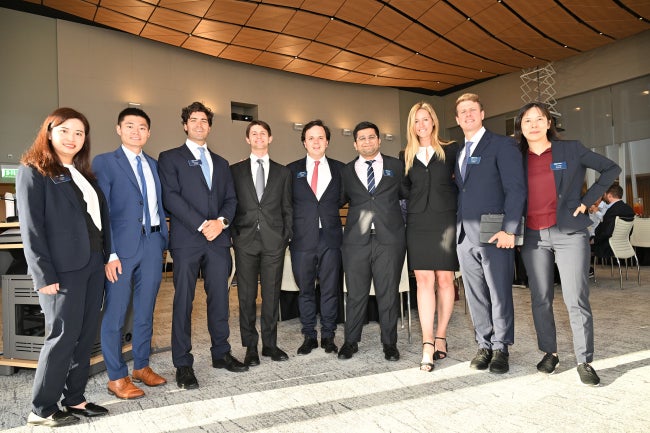
For Barnum (’26), participating in SIF represented something more personal: a goal she set before enrolling, an Anderson legacy course she wanted to join and, eventually, an experience that helped shape how she thinks about investing, leadership and the discipline required to make decisions when real money and real pressure are involved.
“I knew about SIF from some alumni that I had spoken with,” says Barnum, who also served as Anderson Student Association president during her second year in the full time MBA program. “I asked them, ‘As you look back on your academic career at UCLA, what stands out to you as one of the most impactful classes?’ And a lot of the folks I connected with had been in SIF.”
For prospective students, SIF is easy enough to describe as a finance course. It is a capstone. It is technical. It requires modeling, research, sector expertise and portfolio management. But Barnum’s description moves quickly past the catalog language. What makes it distinctive, she says, is that students are not simply writing stock pitches and practicing with theoretical money. They are managing real capital.
“As a course, the Student Investment Fund is unique among MBA programs,” Barnum says. “We manage roughly $4 million of the endowment, and what we make on that investment goes to funding scholarships for students.”
Just as important, she says, is the responsibility that comes with managing real money every day.
“The portfolio management process is an incredible learning experience because we’re managing real money every day,” she says. “You build technical modeling skills, learn to defend your investment thesis and make real investment decisions alongside your peers. For students seeking hands-on investing experience, it’s hard to imagine a better class.”
Getting into the room is not automatic.
SIF Fellows are selected through a demanding application process that includes essays, stock write-ups, company presentations and interviews. Once selected, students do not immediately take over the portfolio. They begin by observing and learning from the cohort ahead of them and preparing to inherit responsibility for the fund.
“You overlap with the second-years,” Barnum says. “As a student, you are interviewing throughout the winter quarter. In the spring, you sit in on the end of the second-years’ management process, hoping to pick up any wisdom you can before they pass on the portfolio.” The fund’s structure reinforces that sense of progression. For the first six months, fellows manage the portfolio as a group. Then the equity portion is divided among the fellows, who manage individual portfolios for the second half of the experience.
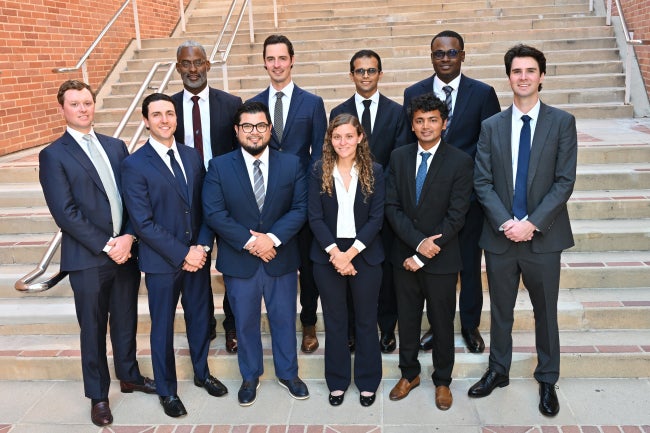
For Barnum, that transition from group management to individual management was one of the defining features of SIF. “Everyone covers a different sector and stocks within that sector, but you’re managing the portfolio as a team,” she says.
That first phase gives students a chance to learn the mechanics of portfolio management while surrounded by peers who are doing the same. They debate, question and absorb each other’s thinking. Later, once students begin managing individual portfolios, the accountability becomes more direct. Fellows see where they stand in relation to their classmates and the benchmark. In other words, the learning environment includes a daily reminder that every decision — or lack of decision — has consequences.
That could make the course sound hypercompetitive, but Barnum says it’s more collaborative than it might appear. Even when the fellows manage individual portfolios, they are still managing one overall fund. A stock that makes sense for one person’s portfolio may create too much exposure for the fund as a whole. If several students want to own the same technology name, the group still has to think about overall sector weights. Portfolio management isn’t just about picking great stocks, it’s also about constructing a balanced portfolio.
That is where SIF becomes as much a course in professional behavior as finance. Fellows defend their ideas. They challenge one another. They hear criticism without treating it as personal. They have to decide whether disagreement exposes a weakness in their thesis or tests the conviction behind it. Barnum says those debates test the strength of students’ own research. “If somebody can break your conviction with a few questions in class, it’s probably a sign you need to revisit your investment thesis.
“It’s not personal, it’s professional,” she says. “It is supposed to make you better. The challenges in class are intended to improve your analysis. If your thesis holds up, your conviction only becomes stronger.”
That lesson became especially important for the 2025–26 SIF Fellows, who managed through a volatile global economy shaped by tariff uncertainty, shifting Federal Reserve expectations, geopolitical risk, questions about AI valuations and sharp moves in technology stocks.
The point of SIF, however, is not simply to beat a benchmark in any given year. It is to teach students how to think, how to evaluate decisions and how to understand the difference between a bad outcome and a bad process. It is to provide a hands-on experience rarely found in business school.
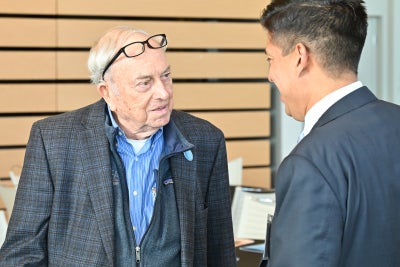
At the final SIF presentation of the year, Professor Bill Cockrum reminded the fellows to focus on process rather than short-term outcomes. Most lessons, he told them, come from mistakes.
The SIF annual report from the 2026 cohort makes the same point in the language of investing. The report notes that the year was defined as much by missteps as successes and that those lessons permanently shaped how the fellows think about portfolio management.
Several of those lessons came from individual stock decisions. The cohort cited investments such as Eli Lilly and Spotify as reminders of the importance of valuation discipline and downside modeling. In both cases, the fellows concluded they had not fully accounted for the risks if their original investment thesis proved wrong.
That may sound like an investment lesson — and it was. But Barnum took away something bigger. “Markets will always surprise you,” she says. “You can’t predict every macro event or market move. What you can control is the rigor of your research and the discipline behind your decisions. Conviction is essential, but so is the humility to recognize when you’re wrong, and to make a move.”
One comment from the final SIF presentation stood out: “Behavioral discipline is the rarest edge.”
Barnum agreed with the idea. “I think that’s so true,” she says. “I think it’s really hard to stay disciplined when the market isn’t doing well.” But for Barnum, behavioral discipline does not mean stubbornness. It means doing the work ahead of time so that, when a stock moves down or the market changes, the decision to hold, sell or reassess is grounded in research rather than emotion. “The goal is to think through the downside before it happens,” she says. “You decide in advance which developments would warrant changing your position, rather than react emotionally to short-term market moves.”
That kind of discipline is precisely what Cockrum has tried to build into SIF since its founding. A longtime Anderson faculty member, donor, mentor and advocate, Cockrum created the investing course that became SIF and has overseen the fund for decades. Cockrum has described the school as a place where he could give back and make a difference; SIF has become one of the clearest expressions of his Anderson legacy and commitment.
He has not done it alone. SIF draws on a network of faculty, alumni and investment professionals who return to teach, advise and open doors for students. In the room with him at the final presentation for Barnum’s cohort were: Professor Emeritus Al Osborne, who helped get SIF off the ground; Shawn Patt (’07, B.S. ’00), who took over teaching the class; Shelby Notkin, the retired chair of Capital Group and longtime SIF advisor; and dozens of SIF alumni. The network is not a talking point. It is part of what draws students to the program. “The community around SIF at Anderson is really strong,” Barnum says. “SIF alumni pick up the phone when a student reaches out.”

She found that alumni who had gone through the experience were willing to talk about jobs, firms, investing and the course itself. Some would spend an hour on the phone “at the drop of a hat,” she says. That generosity extends to the classroom. Barnum describes Cockrum, Patt and Notkin as teachers and mentors deeply committed to the development of each cohort. “I can’t speak highly enough about the professors,” she says. “They show up early to every class. They leave late. They are, in the best way, obsessed with helping make you a better investor than when you walked in.”
The alumni culture adds another layer. SIF is not only passed down through documents and portfolio holdings. It is passed down through relationships. Current fellows learn from former fellows. Alumni return for presentations and firm visits. Students help recruit and prepare the cohort that follows them. At Barnum’s final presentation, two SIF Fellows received job offers on the same day, another reminder that SIF’s community extends beyond the classroom.
Barnum describes the experience in terms that sound less like a course and more like a lifelong affiliation. “Some of my closest friends that I’ve met came from SIF,” she says. “One of the greatest takeaways from SIF isn’t just what you learn about investing, it’s the people. I know this team will be the group I turn to when I’m thinking through investment ideas, career decisions, or complex challenges throughout my career. Your classmates become lifelong confidants.”
For prospective students, that may be the most apparent promise of SIF. The fund offers technical training, practical experience and a rare opportunity to manage real capital before graduation. But Barnum’s reflections suggest that the larger value is not captured in a portfolio return.
“Beyond the technical skills and the investing experience,” Barnum says, “I think it’s a community of lifelong friendships and professional relationships that we’ll all carry with us throughout our careers.”